


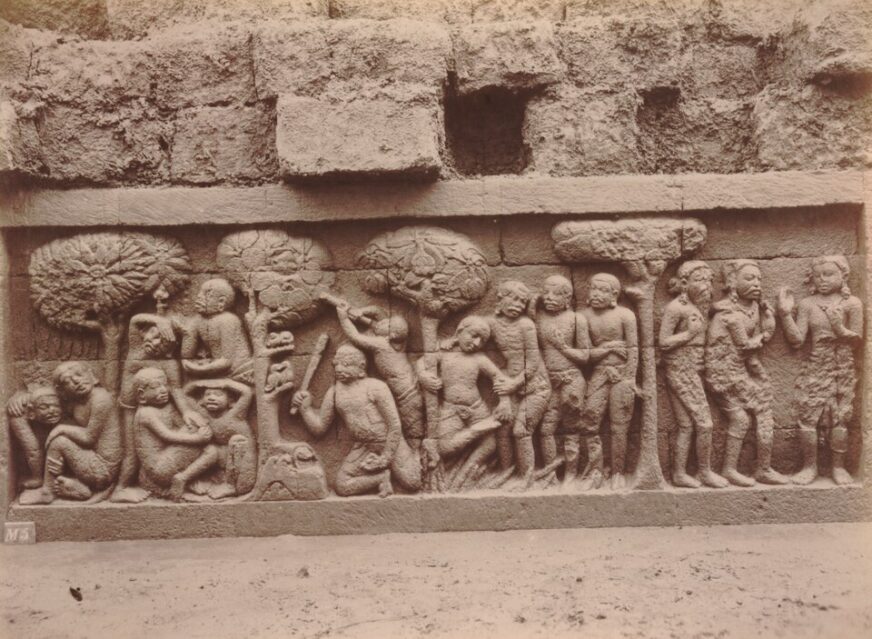
The hidden reliefs of Borobudur Temple are a series of intricate carvings on the monument’s original base, deliberately concealed for structural reasons. These 160 panels depict the Kāmāwacana, illustrating the law of karma and the cycle of human desire, offering deep insights into ancient Buddhist philosophy. Take this all knowledge at Borobudur Tours
- The original base of Borobudur contains 160 panels of hidden reliefs.
- These carvings depict the Kāmāwacana, representing the realm of desire and the consequences of actions.
- The hidden reliefs were intentionally covered by a secondary casing stone, likely for structural stability, shortly after the temple’s construction.
The hidden reliefs of Borobudur Temple represent one of the monument’s most intriguing and least-seen artistic treasures. These intricately carved panels, located on the structure’s original base, offer a unique window into ancient Buddhist teachings that were deliberately concealed.
The Genesis of Concealment: Why the Hidden Reliefs of Borobudur Temple Remained Unseen
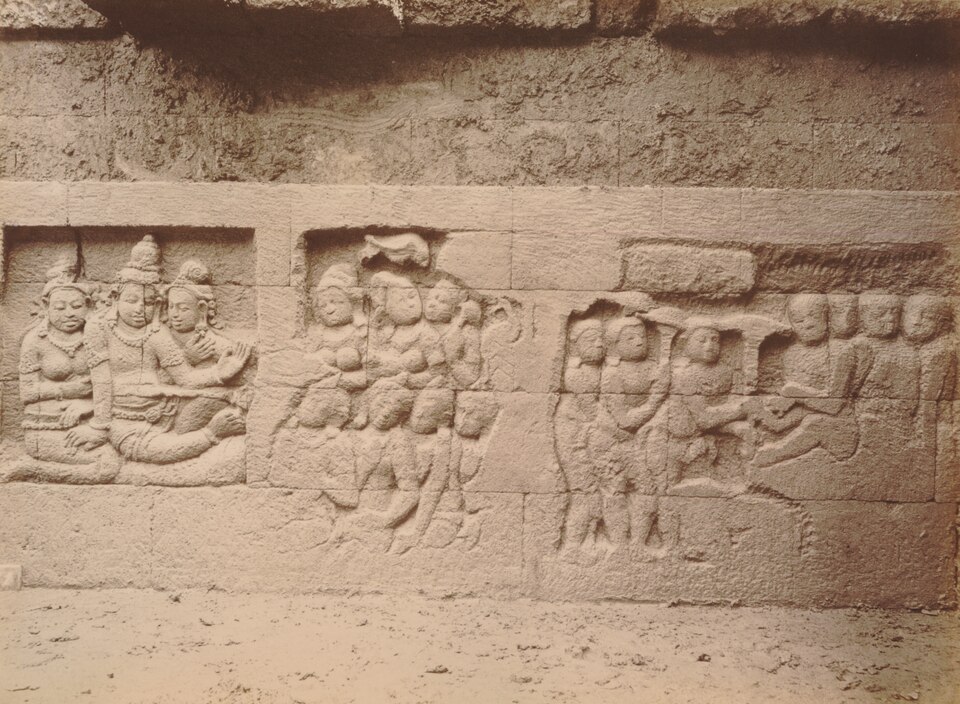
When you consider Borobudur, your mind likely conjures images of its grand stupas and the extensive narrative reliefs visible on its upper terraces. However, below the visible structure lies another layer of profound artistry: the hidden reliefs of Borobudur Temple. These 160 panels were part of the initial construction but were covered by an encircling casing stone shortly after their creation.
Architectural Decisions and Their Implications
The primary reason for concealing the hidden reliefs of Borobudur Temple was structural stability. The original foundation, while beautifully adorned, exhibited signs of instability, particularly concerning the expansive weight of the upper levels. Engineers and architects of the time made a practical decision to add a reinforcing outer layer, essentially burying the lowest series of carvings. This choice, while sacrificing immediate visual access, ensured the long-term survival of the temple itself. It provides a fascinating dilemma for preservationists and historians, balancing artistic display with structural integrity.
The Kāmāwacana Cycle and Early Interpretations
The narrative depicted on these hidden reliefs is known as the Kāmāwacana, or the “Law of Karma.” It illustrates the realm of desire, showing human actions and their corresponding consequences, both positive and negative. Unlike the Jātaka and Avadāna stories on the visible levels that focus on the Buddha’s previous lives and good deeds, the Kāmāwacana serves as a stark reminder of the moral order of the universe. The decision to carve these specific stories on the foundation suggests their fundamental importance to the overall spiritual journey represented by the temple’s ascent.
Decoding the Narrative: Stories Etched in Stone on the Hidden Reliefs of Borobudur Temple
Understanding the narratives on the hidden reliefs of Borobudur Temple provides a richer appreciation for the monument’s comprehensive spiritual message. These panels are not merely decorative; they are instructional, guiding the observer through the fundamental principles of Buddhist cosmology.
Depictions of Karma and Desire
The Kāmāwacana cycle visually explains the principle of karma. You see scenes illustrating people engaging in various acts—both virtuous and unvirtuous—and subsequently experiencing the effects of those actions. For instance, some reliefs depict individuals sharing wealth, leading to prosperity, while others show acts of violence resulting in suffering. This direct cause-and-effect imagery was designed to educate and inspire moral conduct among devotees. It acts as a powerful teaching tool, even if it was eventually covered. The artists’ skill in conveying such complex moral lessons through stone is truly remarkable.
The Significance of the Kāmāwacana Panels
The placement of the Kāmāwacana panels at the very base, directly beneath the visible levels, is deeply symbolic. It represents the foundational level of existence—the realm of desire (Kāmadhātu) from which all sentient beings begin their journey toward enlightenment. As visitors would circumambulate the temple, the visible reliefs would guide them through progressively higher spiritual states. The hidden reliefs, therefore, serve as a reminder of the initial state of human experience and the karmic foundations upon which spiritual progress is built. This architectural and artistic decision emphasizes the holistic nature of the Buddhist path as envisioned by Borobudur’s creators.
Preservation and Revelation: Documenting the Hidden Reliefs of Borobudur Temple
Though the hidden reliefs of Borobudur Temple were buried for centuries, their existence was not forgotten. Their temporary exposure and subsequent documentation have provided invaluable insights into the temple’s original design and purpose.
The Cephas Documentation: A Critical Record
One of the most significant periods in the history of the hidden reliefs of Borobudur Temple occurred in the late 19th century. Based on our field experience in historical documentation and preservation, a challenge often arises when a site requires structural modifications that impact original features. The Documentation: To preserve the structure, the base could not be left open. In 1890–1891, the Javanese court photographer Kassian Cephas was commissioned to photograph all 160 panels before they were re-buried. His black-and-white photos remain the only complete visual record of this artistic masterpiece. This foresight was paramount. Without Cephas’s painstaking work, our understanding of these foundational reliefs would be largely incomplete, leaving a significant gap in the temple’s narrative. It demonstrates the critical importance of meticulous documentation in the face of structural necessity. His efforts ensured that even if unseen, the stories of the Kāmāwacana would not be lost to history.
Modern Efforts in Understanding and Protection
Today, the hidden reliefs of Borobudur Temple continue to fascinate researchers and enthusiasts. While they remain mostly covered to maintain the temple’s structural integrity, modern techniques like ground-penetrating radar have allowed non-invasive studies. These technologies help us visualize the buried sections without physical excavation. Practical tips from our team often involve leveraging such non-destructive methods to study sensitive historical sites. Efforts by UNESCO and the Indonesian government focus on comprehensive monitoring and maintenance of the entire monument, including its hidden elements, ensuring its preservation for future generations. The challenges of preserving a structure of this scale, while respecting its artistic and spiritual layers, are immense. For those interested in deeper study, the detailed photographic records of Kassian Cephas are available in various academic archives and publications, providing a thorough visual exploration of these unique carvings. You can learn more about Borobudur’s conservation efforts and history on Wikipedia.
The hidden reliefs of Borobudur Temple are a profound reminder that some of the most meaningful lessons can be found beneath the surface, requiring deliberate effort and a keen eye to fully appreciate. Their existence adds another layer of depth to Borobudur’s already rich spiritual and artistic legacy.
Deepen Your Understanding of Borobudur
Want to explore more fascinating insights into ancient wonders or need expert guidance on cultural heritage projects? Connect with our team for unparalleled knowledge and assistance.
FAQ
What are the hidden reliefs of Borobudur Temple?
The hidden reliefs of Borobudur Temple are 160 carved panels on the monument’s original lowest base, depicting the Kāmāwacana, which illustrates the law of karma and the cycle of human actions and consequences.
Why were the hidden reliefs of Borobudur Temple covered?
They were covered by an outer casing stone shortly after the temple’s construction, primarily for structural stability to support the immense weight of the upper levels.
What do the hidden reliefs of Borobudur Temple depict?
They depict the Kāmāwacana, which are narratives illustrating the moral principles of karma, showing the consequences of both good and bad deeds in the realm of desire.
Can visitors see the hidden reliefs of Borobudur Temple?
No, the hidden reliefs remain covered for the temple’s structural preservation. Only a small section at the southeast corner is occasionally uncovered for research or conservation, but it is generally not accessible to the public.
Who documented the hidden reliefs before they were re-covered?
Kassian Cephas, a Javanese court photographer, was commissioned in 1890–1891 to photograph all 160 panels, creating the only complete visual record before their re-burial.
How many hidden reliefs are there in Borobudur Temple?
There are 160 panels of hidden reliefs carved into the original base of Borobudur Temple.
What is the significance of the Kāmāwacana depicted on the hidden reliefs?
The Kāmāwacana represents the foundational level of human experience, the realm of desire (Kāmadhātu), and serves as a powerful teaching tool about the universal law of karma.


