


Borobudur Temple is so special in architecture and philosophy
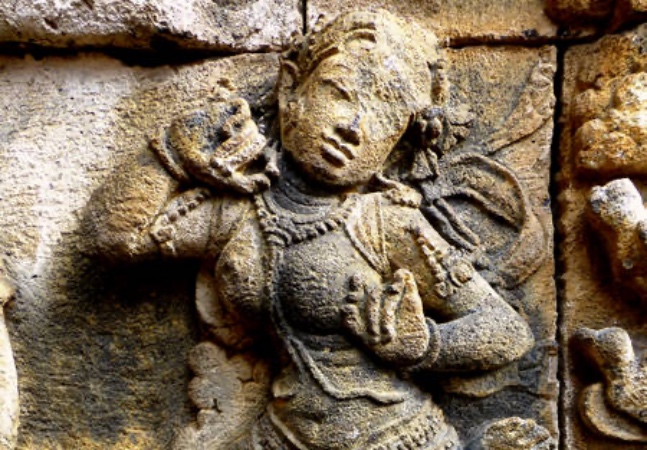
The crafted volcanic stone reliefs of the Borobudur temple are narrative carvings that depict scenes from Buddhist teachings, including the life of the Buddha, his past lives, and the spiritual journey toward enlightenment. There are approximately 2,670 individual panels, with 1,460 of them forming a continuous story spanning 3,000 meters along the temple’s galleries.
When visiting the temple, in detil, exploring each levels until the top, will not enough 1-2 hours. The reliefs serve as a visual guide for pilgrims following the pradaksina, or clockwise circumambulation, of the temple. They begin on the lower levels and guide the pilgrim upward through the various realms of Buddhist cosmology.
The three realms of existence
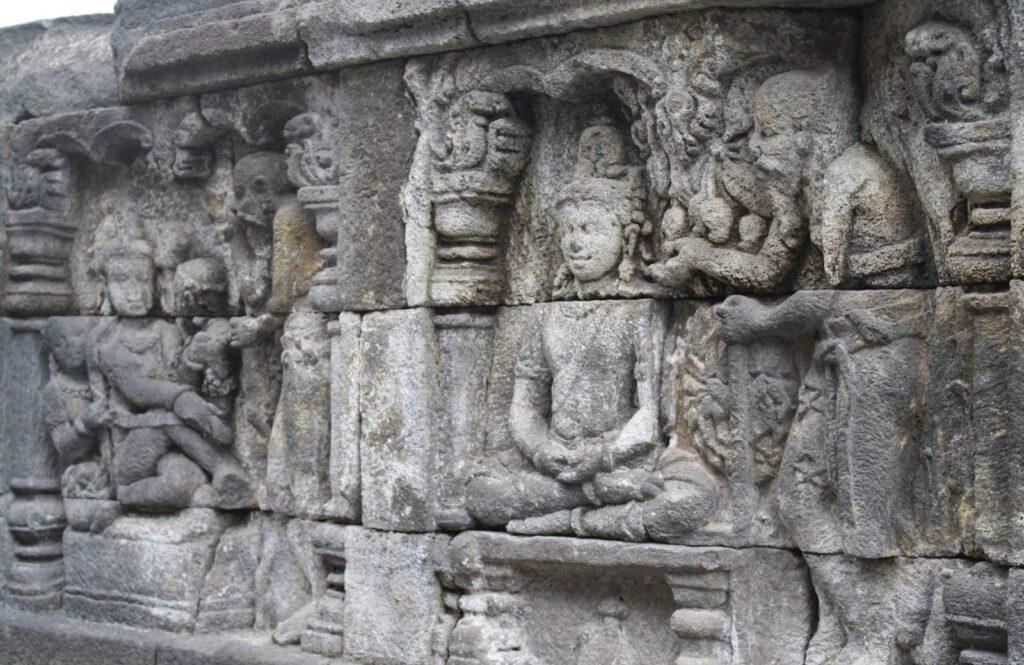
The reliefs are organized according to the three spheres of the universe in Mahayana Buddhism, which correspond to the temple’s structure:
- Kamadhatu (The Realm of Desires): The hidden base of the temple features 160 panels illustrating the Karmawibhangga Sutra. These reliefs depict the law of cause and effect (karma), showing the consequences of human actions, desires, and vices.
- Rupadhatu (The Realm of Forms): On the four square terraces, pilgrims pass through galleries filled with reliefs that have freed themselves from worldly desire. These include stories from four main cycles:
- Lalitavistara: The complete life story of the Buddha, Siddhartha Gautama, from his birth to his first sermon.
- Jataka and Avadana: Stories of the Buddha’s previous lives (Jataka) and the compassionate deeds of other divine beings (Avadana).
- Arupadhatu (The Formless Realm): The upper, circular terraces of the temple have no reliefs, symbolizing the ultimate spiritual state free from all names and forms. It is here that pilgrims have progressed beyond the visual narrative, moving toward pure abstraction.
Features of the reliefs and pannels
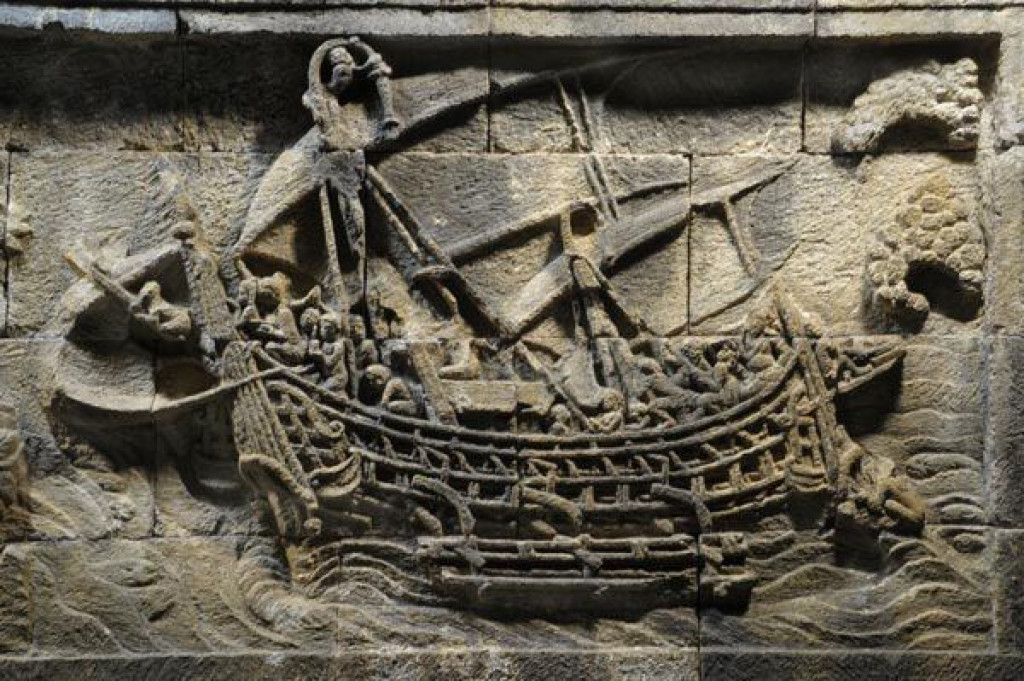
- Narrative style: The stories are told in a continuous sequence, meant to be read in order as a pilgrim moves along the path.
- Depiction of society: Beyond religious stories, the carvings also offer a rich portrayal of 8th-century Java, showing scenes of daily life, courtly activities, and local flora and fauna.
- Artistic influence: The reliefs demonstrate a strong influence from Indian art, particularly in the poses and figures of the deities and noble characters.


Preservation of the site as a priority.
I was very moved to finally discover and visit this site. Because I promised myself that I would do it after I had the privilege of accessing Pagan in Myanmar a very long time ago and Angkor What almost 10 years ago. I thought I couldn’t do it, because the online tickets to access the structure were “sold out” over many days. But once there I discover that they still keep a certain number of tickets available. I wouldn’t have known, if I hadn’t had the idea to go to the ticket office to get some information, because I only had tickets for the “walk” around the structure. The temple is beautifully preserved and one can understand why, because there is a precise and rigorous organization of the visit, with a guide who also acts as a framework. For some it may seem excessive, but there is a very positive aspect: it is not crowded, the visit is pleasant with enough explanations and also time to take nice photos. Our guide spoke very good English and took beautiful pictures of us. It takes about three hours between Welcoming and Exit. Don’t be trapped by signs indicating “fake” exits to take you through a maze of shops. [Clochette15, Switzerland]
Borobudur temple can be visited by different ways; public entrance, vip entrance, Borobudur sunrise & sunset, and spiritual visit.